
The history of cleanroom technology is the story of one persistent problem: contamination. As lab work and manufacturing grew more precise and product tolerances tightened, dust, airborne particles, microbes, and chemical residue became major threats to quality, safety, and performance.
Today, cleanrooms support industries such as pharmaceuticals, semiconductors, aerospace, biotechnology, and medical device manufacturing. That level of control took many years to develop, and its history shows how industrial demand shaped a highly specialized building solution.
How Did Early Contamination Control Begin?
Contamination control began with basic housekeeping, long before formal cleanrooms existed. Manufacturers and scientists understood that uncontrolled environments caused problems. Early industrial facilities reduced dust and impurities with cleaning, enclosed workspaces, filtered ventilation, and strict worker procedures.
Hospitals and laboratories also shaped early contamination control practices. Sterile operating spaces and controlled airflow showed that cleaner environments could improve outcomes and reduce risk in sensitive settings.
Why Did Industrial Growth Demand Cleaner Spaces?
Industrial growth in the early 20th century made manufacturing more complex and more sensitive to its environment. Precision machining, optics, chemicals, and electronics all needed cleaner conditions than conventional industrial buildings could provide. Researchers and manufacturers needed a more reliable way to control particles, temperature, humidity, and airflow within defined production zones.
How Did World War II Speed Up Controlled Environment Design?
World War II drove rapid advances in aviation, military equipment, and scientific production. These sectors needed tighter tolerances and higher reliability, which raised the need for disciplined environmental control in manufacturing and testing spaces.
Defense-related production also expanded research into ventilation, filtration, and pressure management. That work laid important groundwork for modern cleanroom design, even before the term "clean room" came into wide use.
When Was the Modern Cleanroom Invented?
The modern cleanroom took shape in the 1950s and early 1960s. A key breakthrough came from work on controlled airflow systems that continuously sweep particles away from critical work areas. Willis Whitfield's laminar-flow cleanroom model with filtered airflow raised the level of control. Moving filtered air in one uniform direction at controlled speeds reduced turbulence and limited the spread of particles across production areas.
This shift moved cleanroom design from simple enclosure and cleaning toward engineered contamination control. Instead of reacting to dust after it appeared, manufacturers could manage the movement of air and particles in a predictable way.
How Did the Semiconductor Industry Raise the Standard?
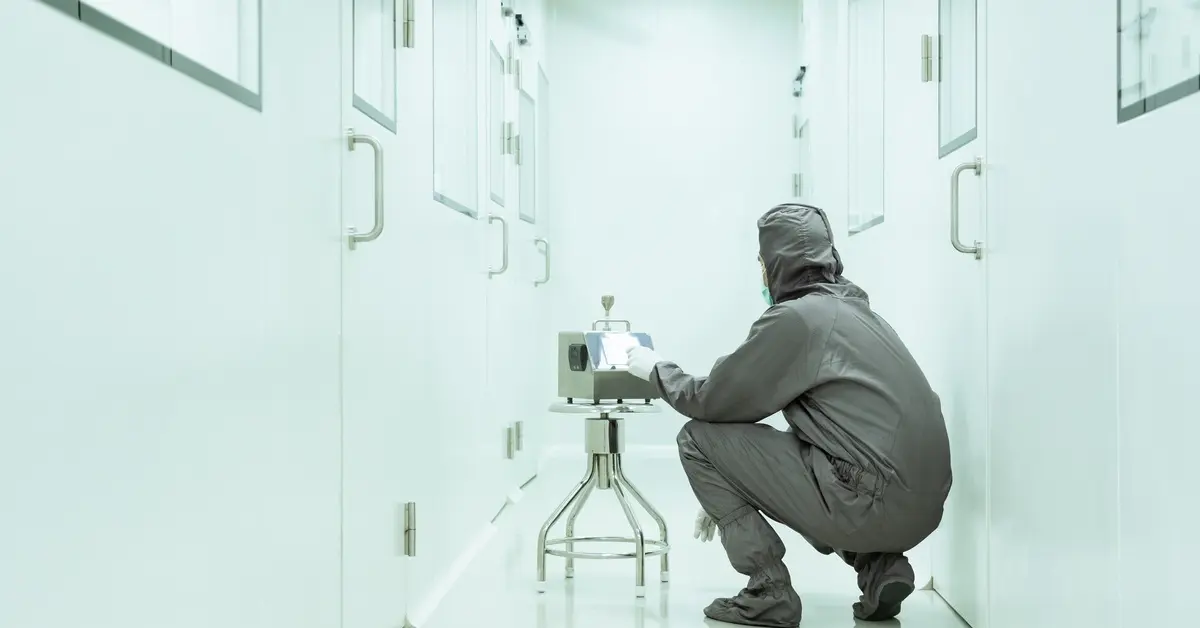
Semiconductor manufacturing pushed cleanroom technology forward quickly in the 1960s and 1970s. Microelectronic components were so sensitive that even tiny particles could ruin entire production runs.
That demand drove improvements in HEPA filtration, room pressurization, gowning protocols, and material flow planning. Semiconductor facilities set the expectation that cleanrooms needed measurable performance standards instead of general cleanliness goals.
How Did Cleanroom Standards and ISO Classifications Develop?
Standard classification systems gave industries a common language for cleanliness levels as cleanroom use spread. They defined allowable particle counts and created a clearer basis for design, validation, and compliance.
Over time, the industry moved toward ISO classifications, which brought a more globally consistent framework for evaluating air cleanliness in controlled environments.
How Did Pharmaceuticals and Life Sciences Expand Cleanroom Use?
Pharmaceutical and biotechnology production made cleanrooms even more important. In these sectors, contamination affected product quality, patient safety, regulatory compliance, and batch integrity. Facilities needed particle control plus careful attention to microbial contamination, surface cleanability, validation, documentation, and process separation.
By the late 20th century, cleanrooms had become highly coordinated building systems. Walls, ceilings, doors, lighting, HVAC systems, pass-throughs, and finishes all had to work together to hold the required environment.
Why Did Prefabricated Cleanroom Construction Rise?
Prefabricated construction grew because traditional site-built cleanrooms showed major limitations as demand increased. Long construction schedules, unpredictable field conditions, and difficult future modifications created challenges for businesses that needed speed and flexibility.
Prefabrication offered a more efficient path. Factory-built components allowed cleaner installation, more consistent quality, and faster deployment, which made controlled environments practical for a wider range of industries.
Businesses also valued the ability to adapt facilities as production needs changed. Modular cleanrooms made it easier to expand, reconfigure, relocate, or upgrade controlled spaces without starting from scratch.
How Have Digital Controls Improved Cleanroom Reliability?
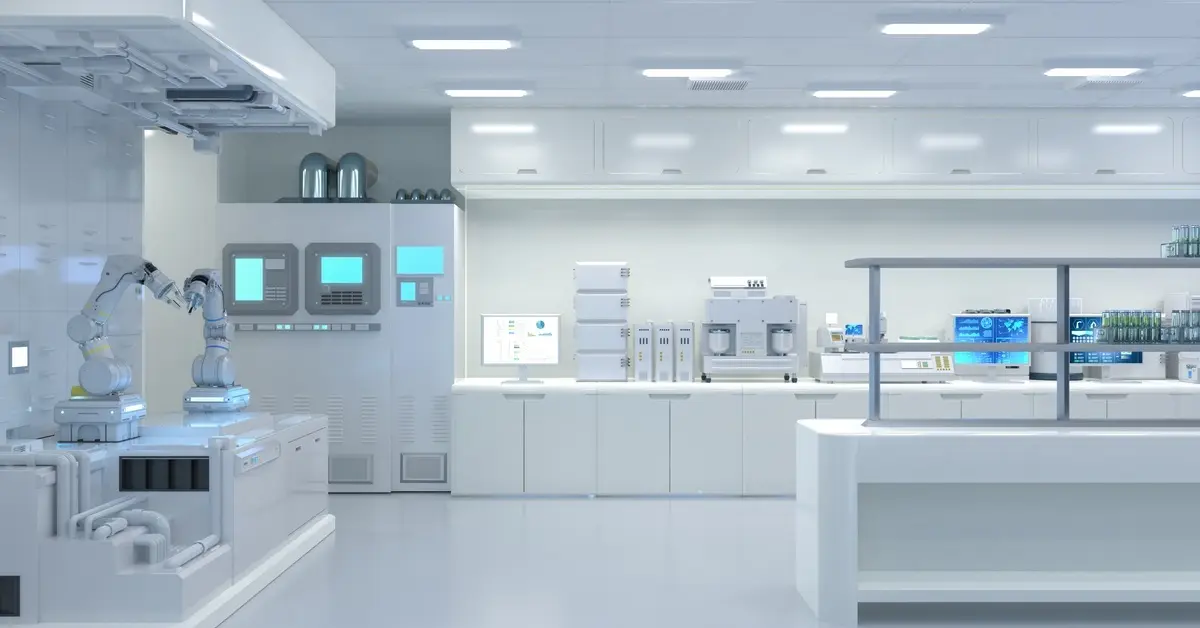
Digital controls let modern cleanrooms track conditions in real time, not just rely on physical barriers and filtered air. Monitoring and building controls now track pressure differentials, humidity, temperature, filter performance, and alarm conditions.
That visibility supports better decisions and faster response to changing conditions. It also helps businesses keep documentation and operational consistency in regulated or high-value production environments.
What Defines Cleanroom Technology Today?
Today's cleanroom design reflects decades of refinement across engineering, manufacturing, and building science. Facilities now expect faster installation, stronger performance, easier maintenance, and smarter long-term adaptability.
That is why modular solutions keep gaining attention across industrial and technical markets. National Partitions supports this shift with cleanroom systems designed for efficient installation, dependable performance, and the flexibility modern facilities require.
What Does Cleanroom History Mean for Facilities Today?
The history of cleanroom technology shows a steady move toward greater control, better standardization, and more adaptable construction methods. Business owners, plant managers, and engineers now expect controlled environments to support both technical performance and practical facility goals.
That expectation makes planning more important than ever. Cleanroom systems must match process requirements, support future growth, and fit smoothly into the overall operation.
What Is the Future of Cleanroom Construction?
The next phase of cleanroom technology will center on flexibility, speed, and integrated performance as industries keep demanding precision. Prefabricated systems are well positioned to meet those needs, especially in facilities that cannot afford long disruptions or rigid layouts.
National Partitions brings decades of experience in prefabricated construction for modular offices, enclosures, and cleanroom applications. For organizations planning new controlled environments or upgrading existing spaces, the National Partitions manufacturing team delivers practical solutions built for performance, efficiency, and long-term value.
Cleanroom technology has moved from basic contamination control practices to fully engineered environments that support some of the most demanding industries in the world. That history makes one point clear: better environmental control drives better manufacturing results.
National Partitions helps businesses apply those lessons with prefabricated cleanroom systems tailored to real operational needs. Contact the team today to discuss modular office and cleanroom solutions that support cleaner production, faster installation, and better facility performance.