
Cleanroom maintenance is the set of protocols, schedules, and technologies that keep a controlled environment within its contamination limits. Cleanrooms are critical in manufacturing, pharmaceuticals, and scientific research, where they hold pollutants such as dust, airborne microbes, and chemical vapors to extremely low levels. Industries rely on them for product safety, reliability, and compliance with strict regulatory standards.
Keeping a cleanroom clean takes a rigorous, multifaceted approach. Facility managers must set strict protocols for personnel behavior, cleaning procedures, and equipment maintenance. A cleanroom performs only as well as these strategies are carried out, day after day. Below are the essential maintenance approaches that keep cleanrooms working at their best.
What Types of Cleanroom Contamination Are There?
Cleanroom contamination falls into three main types: physical, biological, and chemical. Understanding each one is the foundation of effective maintenance, because even a minor contamination event can cause significant financial loss or compromise product integrity.
Physical Contaminants
Dust, fibers, and skin cells shed by personnel settle on equipment and products, where they cause defects or failures.
Biological Contaminants
Bacteria, fungi, and viruses enter through poor hygiene or improper gowning and thrive where moisture or organic matter is present. Rigorous disinfection and monitoring are essential to control biological risk.
Chemical Contaminants
Vapors, gases, and residues from cleaning agents or construction materials can compromise processes. Careful selection and removal of materials keeps this risk low.
Contamination Sources
External sources include filtration leaks and dirt tracked in from outside. Internal sources include particles shed by people, equipment, or processes. Identifying the source points to the right mitigation strategy.
What Are the Core Cleanroom Cleaning Protocols?
The core protocol is a written standard operating procedure that cleans from the top down. Gravity pulls particles downward, so starting at the ceiling means dislodged dust falls to the floor, which the team cleans last. This order prevents recontamination of surfaces already cleaned.
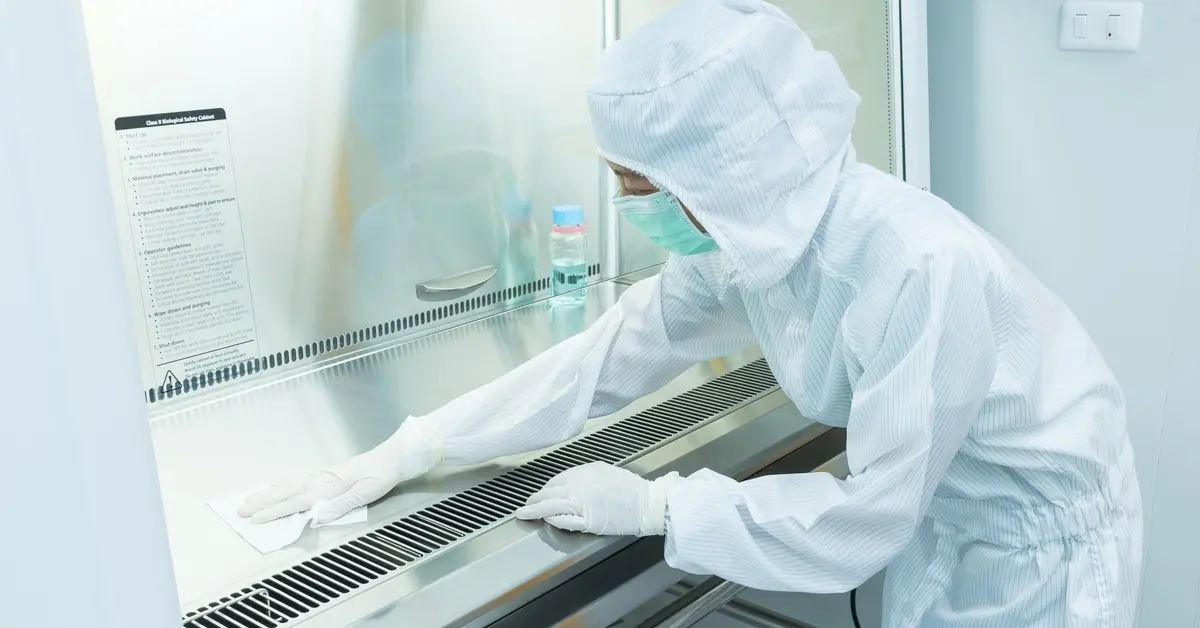
Wiping technique determines whether particles are captured or simply spread. Staff should use unidirectional strokes with overlapping paths, since circular motions tend to redeposit contaminants. Personnel must use cleanroom-specific wipers that do not shed fibers or particles.
Selecting and rotating cleaning agents prevents microbial resistance. Facilities often alternate between distinct types of disinfectants for broad-spectrum efficacy. A typical rotation pairs a phenolic agent with a quaternary ammonium compound. This keeps resident flora from developing resistance to any single chemical agent.
Residue removal is the critical final step. Disinfectants often leave salts or films that can harbor contaminants or damage surfaces. Cleaning teams typically rinse surfaces with sterile water or isopropyl alcohol after disinfection. This returns the surface to a neutral state and prevents chemical buildup.
How Often Should a Cleanroom Be Cleaned?
Cleaning frequency depends mainly on the cleanroom's classification. An ISO Class 5 environment needs more frequent attention than an ISO Class 8 facility. Facility managers should match each schedule to the room's operational activity and risk level. Following a strict schedule keeps contamination within acceptable limits.
Daily Maintenance
Daily cleanroom maintenance focuses on high-traffic areas and critical work surfaces. Personnel should wipe down benchtops, door handles, and pass-through chambers at the start and end of each shift. Floors usually need mopping every day to control settling particulate. Waste must be removed daily so potential contaminant sources do not accumulate.
Weekly Maintenance
Weekly routines target areas that are harder to reach or prone to gradual buildup. These can include walls, windows, and storage shelves. Staff should also inspect and clean carts and mobile equipment during the weekly cycle. These tasks stop dust from accumulating in peripheral areas over time.
Monthly Maintenance
Monthly or quarterly maintenance is a deep clean of the entire facility. It covers light fixtures, ceiling grids, and the areas behind equipment. Maintenance teams should also inspect and replace sticky mats and check the integrity of seals and gaskets.
Which Technologies Improve Cleanroom Cleaning?
Automated cleaning, vapor decontamination, smart monitoring, and self-cleaning surfaces all improve cleanroom sterility. Automated systems reduce reliance on human labor, the primary source of contamination. Robotics perform repetitive cleaning tasks with consistent pressure and coverage. These machines work without shedding particles or tiring.
Vaporized hydrogen peroxide systems are another advanced decontamination method. The process fills a sealed space with hydrogen peroxide vapor to sterilize every exposed surface. It is highly effective for bio-decontamination in pharmaceutical cleanrooms. The vapor reaches hard-to-reach areas that manual wiping can miss.
Smart monitoring systems deliver real-time data on environmental conditions. Sensors detect spikes in particle counts or changes in pressure differentials immediately. This instant feedback lets facility managers respond to contamination events before they affect production. Integrating these sensors supports a more proactive maintenance strategy.
Self-cleaning surface technologies are also gaining ground. These materials carry antimicrobial coatings that inhibit the growth of bacteria and fungi. They do not replace standard cleaning, but they add a layer of protection. The surfaces reduce the contamination burden between cleaning cycles.
How Do Modular Cleanrooms Make Cleaning Easier?
Modular cleanrooms make cleaning easier because their prefabricated components have smooth, non-porous surfaces. Without crevices and pores, contaminants have nowhere to accumulate, and wiping is much simpler. Manufacturers design these components to withstand harsh cleaning agents.
A high-quality modular cleanroom wall system simplifies cleaning through flush connections. Traditional construction often leaves ledges or gaps where walls meet floors and ceilings. Modular systems use coving to create seamless transitions that remove these particle traps. Cleaning staff can then wipe surfaces efficiently without missing corners.
Modular design also makes upgrades and repairs easier. If a wall panel is damaged or stained, maintenance staff can replace that panel on its own. This avoids extensive renovation that generates dust and debris. Facilities can stay operational with minimal downtime during repairs.
National Partitions provides modular cleanroom solutions built for ease of maintenance. Our systems use materials that resist chemical damage and physical wear. A modular system can significantly reduce the long-term labor costs of cleaning. Explore these options to streamline your contamination control strategy.
Why Cleanroom Maintenance Requires Ongoing Vigilance
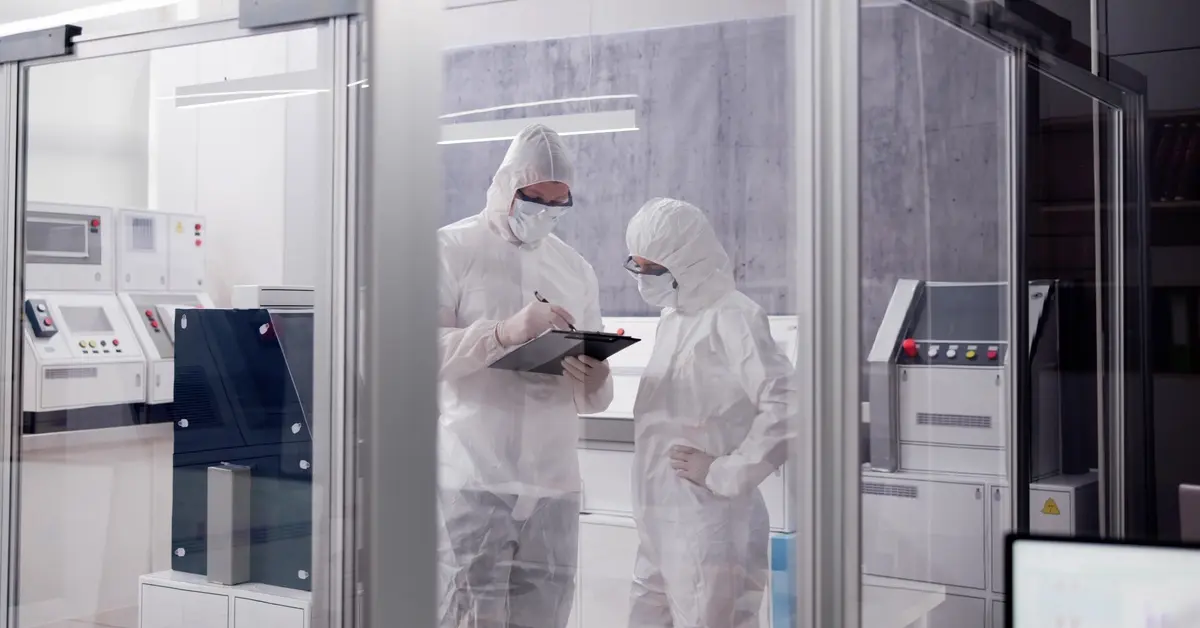
Cleanroom maintenance never ends, because contamination pressure never stops. Success depends on disciplined personnel, rigorous protocols, and the right technology working together. Every person who enters the facility helps preserve the environment's integrity. Training and culture matter as much as the cleaning tools.
Cleanrooms are a significant investment in infrastructure and operation. Protecting that investment calls for a proactive, comprehensive maintenance strategy. By understanding contamination sources and following these maintenance approaches, facilities can keep cleanroom performance and cleanliness consistent. The result is a safe, compliant, and productive environment that meets the demands of modern industry.