Dividing warehouse space well is one of the most effective ways to make a facility more efficient, faster at picking, and safer. Warehouses are more than storage. They are the backbone of many industries, supporting both product creation and distribution. Their success depends less on size than on efficiency, and the way the floor is divided is a major factor. A good division plan helps operations run smoothly, speeds up item picking, and creates a safer environment. Understanding why warehouse division matters puts you in control of operations and helps your team work more efficiently.
Warehouse layout planning is about organization, not square footage. A well-organized space makes operations more efficient, speeds item retrieval, and improves safety. The dos and don'ts below will help you divide your warehouse and keep operations efficient and productive.
Why Do Partition Walls Matter in a Warehouse?
Partition walls matter because they turn open floor space into a safe, organized facility with defined zones. They are more than physical barriers. Whether permanent or relocatable, these walls give managers a high degree of flexibility in how space is used.
Partition walls also support a more focused, productive work environment by reducing distractions between sections. Used strategically, they optimize workflow and make full use of available space, which can lead to a notable increase in operational throughput and effectiveness.
The Dos of Dividing Warehouse Space
Strategic divisions improve warehouse efficiency, safety, and productivity. Portable walls let you customize space as operational needs change. The following dos will help you put these strategies into practice and keep the warehouse performing at its peak.
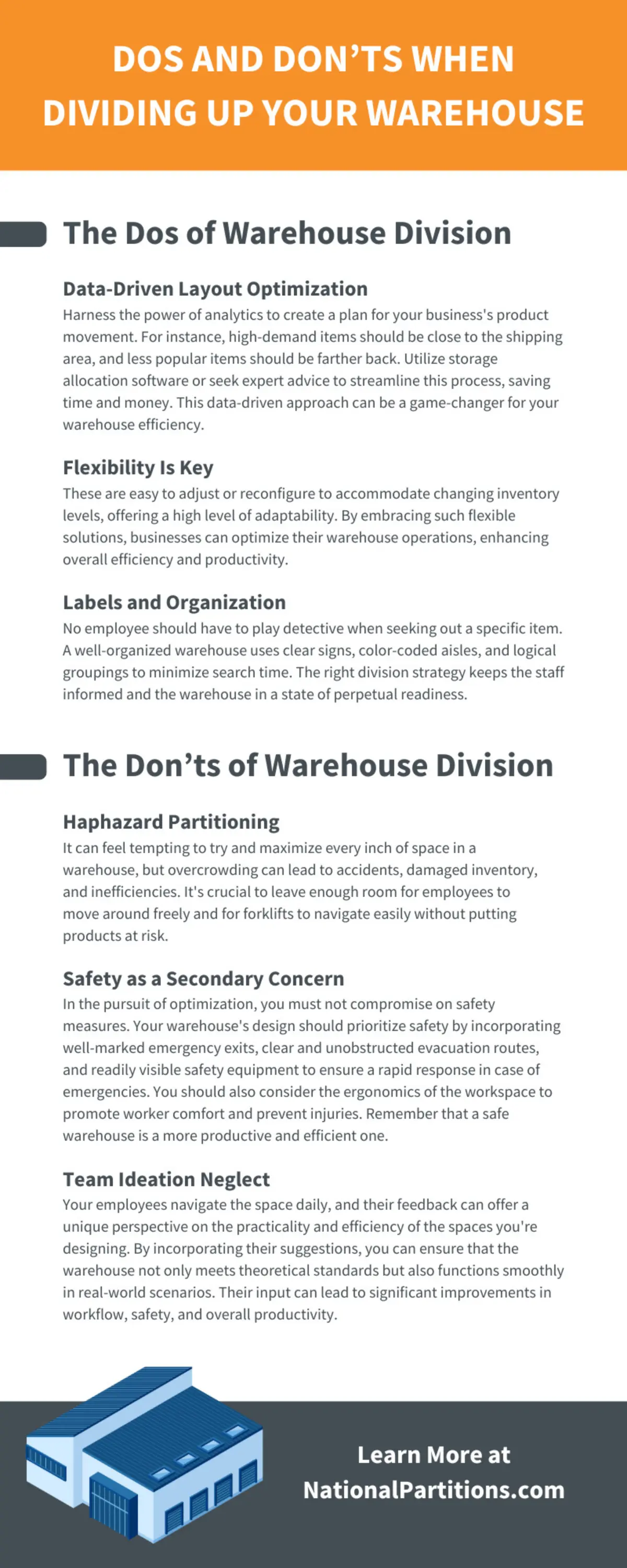
Use Data to Optimize the Layout
Use analytics to plan how products move through your business. For example, place high-demand items close to the shipping area and move less popular items farther back. Storage allocation software or expert advice can streamline this process and save time and money. A data-driven layout can make a major difference in warehouse efficiency.
Build In Flexibility
A one-size-fits-all warehouse design often works against the operation. Every warehouse has its own requirements, and a universal solution may not meet specific needs. A better approach is to use modular or portable walls and racking systems.
These systems are easy to adjust or reconfigure as inventory levels change, which makes the space highly adaptable. Flexible solutions let businesses optimize warehouse operations and improve overall efficiency and productivity.
Label and Organize Every Zone
Employees should be able to find any item without searching. A well-organized warehouse uses clear signs, color-coded aisles, and logical groupings to cut search time. The right division strategy keeps staff informed and the warehouse ready for work at all times.
The Don'ts of Dividing Warehouse Space
Warehouse division strategies can boost efficiency significantly, but several pitfalls can undo those gains. Avoiding these mistakes protects operational integrity and prevents disruptions. Steer clear of the following errors to keep your warehouse a model of efficiency and safety.
Don't Partition Haphazardly
Trying to use every inch of a warehouse is tempting, but overcrowding leads to accidents, damaged inventory, and inefficiency. Leave enough room for employees to move freely and for forklifts to navigate easily without putting products at risk.
Don't Treat Safety as Secondary
Optimization should never come at the expense of safety. Your warehouse design should include well-marked emergency exits, clear and unobstructed evacuation routes, and visible safety equipment so people can respond quickly in an emergency. Consider the ergonomics of each workspace as well, to support worker comfort and prevent injuries. A safe warehouse is also a more productive and efficient one.
Don't Leave Your Team Out of Planning
The people who work in the warehouse play a major role in a successful layout. Involve them in decision-making, because their firsthand experience and insights are valuable.
Employees navigate the space every day, and their feedback offers a practical view of how well a proposed design will work. Incorporating their suggestions makes sure the warehouse meets more than theoretical standards and functions smoothly in real conditions. Their input can lead to significant improvements in workflow, safety, and overall productivity.
What Are the Benefits of Warehouse Partition Walls?
Warehouse partition walls improve safety, environmental control, noise levels, and space costs by creating distinct zones for different activities. Separating activities this way keeps operations orderly and efficient. These are the key advantages of adding partition walls to your warehouse layout:
- Better safety and security: Partition walls form a physical barrier that separates heavy machinery areas from pedestrian zones, which helps reduce accidents. They can also secure high-value inventory areas and lower the risk of theft and unauthorized access.
- Improved environmental control: Some products require specific conditions, such as set temperature or humidity levels. Partition walls create controlled zones within the warehouse. Sensitive products can then be stored and handled under the right conditions, which reduces spoilage or damage.
- Noise reduction: Where machinery and manual work share a floor, noise can hurt worker concentration and productivity. Partition walls act as sound barriers and create quieter zones for tasks that require concentration and precision.
- Cost-effective space management: Partition walls make better use of existing space, which can reduce the need to expand or relocate. That saves on potential construction or moving expenses. It also improves day-to-day operations by streamlining workflow and reducing time lost to inefficient processes.
Adding warehouse partition walls to your layout strategy is more than an operational decision. It is a proactive step toward a more productive, safe, and adaptable space.
Start Planning Your Warehouse Division
Dividing a warehouse is both an art and a science, and with so many factors involved, no single approach guarantees success. Applying these dos and don'ts puts you on the path to a warehouse designed for efficient movement. For a consultation on partitioning that is as customizable as it is efficient, contact our team. We can supply the right warehouse partition walls and industrial wall systems for your facility today. In fast-paced logistics, every division decision counts.